
Should I?

There were moments when it seemed we were in different worlds. The scientists were in one universe; the rest of us in another. You think of the wine industry as a singular thing; something to which we, who are in wine, all belong.
Yet, sitting in the recent Vine to Mind Symposium (a co-venture of UC Davis and Harvard), I realized how extraordinarily individual our approaches to wine can be. We don’t all think about wine in the same dimension. The mind behind wine counts for a lot. Maybe everything.
The Harvard and UC Davis scientists were mostly data scientists, which meant I was already in trouble. Data scientists think in statistics, in numbers, in quantifiable nuggets of data. I think about wine in words, in concepts, in intangibles, in mysteries.
The scientists believed you could not measure wine quality. Except maybe via certain deliverables like “lack of flaws.” What wine writers think of as high quality, asserted one scientist, is nothing more than personal “liking.”
I was sitting next to the writers Felicity Carter and Alder Yarrow, and the three of us squirmed in our seats. I raised my hand. Are there really no characteristics by which a wine can be considered great? I challenged. What about complexity, precision, distinctiveness, length, and the ability to incite emotion? Felicity jumped in. To use art as an example, is there no distinction between, say, a child’s drawing and a Rembrandt? she asked. (Alder was the person who best articulated our “side,” but I was momentarily so stunned by the whole conversation, I didn’t write down exactly what he said.)
In the end, it was a very good thing, this symposium. For me, it was a way of turning the binoculars around and thinking about wine in a way you hadn’t (at least I hadn’t). All in the company of smart data scientists.
Did I mention my college statistics course was pure torture?
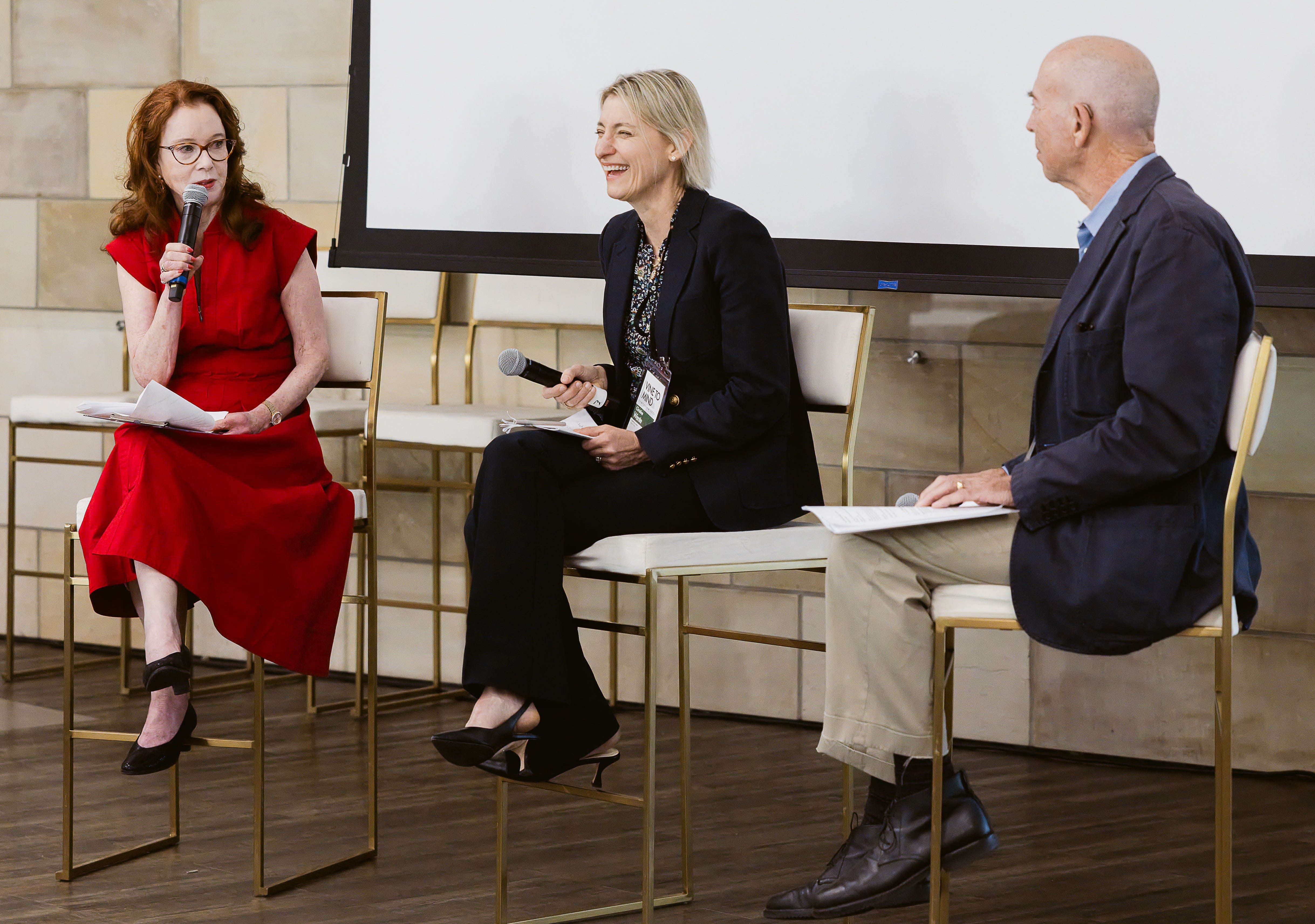
In this photo from the Symposium, I am giving the “Keynote” Conversation, an interview with Christine Wente and Michael Mondavi.
***
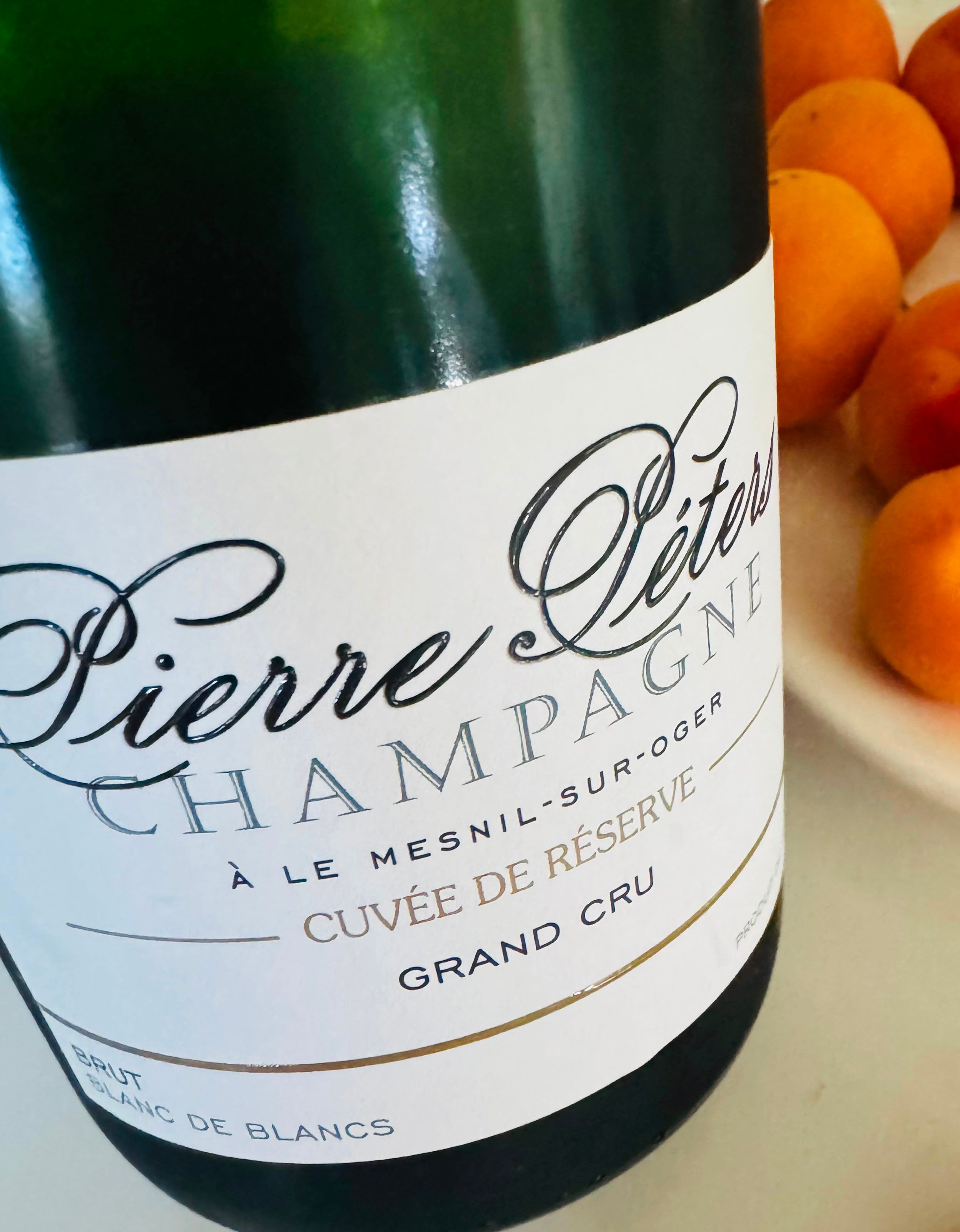
Every now and then (and I mean rarely), I get to drink my favorite Champagne. On the particular recent evening when I opened this Pierre Peters Blanc de Blancs, I was by myself. I stood peering into the wine fridge, considering the bottle, feeling its heft, and wondering: should I?
I did.
Drinking it was like sliding into cool clean cotton sheets on a hot night. As can be the case with the greatest Blanc de Blancs, the exquisite flavors of the wine were wrapped up in the wine’s chalky minerality. It was almost as if the Champagne’s bubbles were tiny mineral globes and encased within those spheres were the rich flavors of pastry cream, brioche, and tangy lemon curd.
I wrote about the Pierre Peters “Cuvée de Réserve” Blanc de Blancs Champagne in my weekly newsletter WineSpeed, where each week I share with you just a few extraordinary wines I think you’ll love. So far this year, the wines have ranged from $10 to $150 a bottle, so sometimes they’re steals and sometimes they’re indulgences, but every single one is delicious.
If you don’t subscribe to WineSpeed, I’d be honored if you would. It’s where I do most of my writing and it’s packed with good stuff that will come to your inbox every Friday. You can subscribe HERE if you like.
***
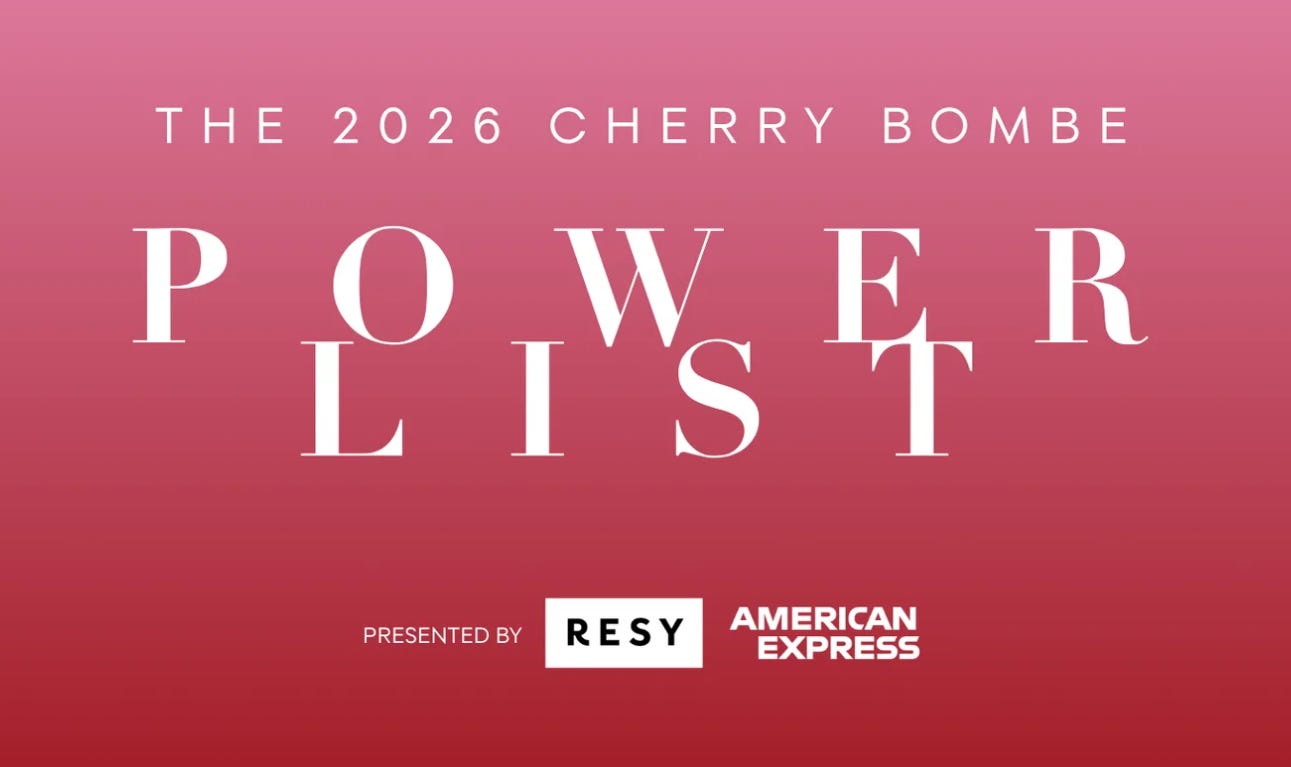
Speaking of being honored, I was surprised last week to find that I was named as one of the honorees on Cherry Bombe’s “2026 POWER LIST.” The annual Power List celebrates women in food and wine who are making the world an “inspiring place.”
***
Something that’s not inspiring is the now massive volume of biased reporting on the topic of alcohol and health. Much of that negative reporting emerges above ground after wending its way through internecine dark tunnels of misinformation funded by anti-alcohol and neo-prohibitionist groups like Movendi.
I used to think these were fringe groups that could be ignored. They aren’t, and they can’t.
I also used to think that any reasonable person (or entity) would never conflate use with abuse. Wrong again.
Witness the World Health Organization’s alarming claim in 2023 that “no amount of alcohol is safe.” They don’t stop there. The WHO’s “Guide for Journalists Reporting About Alcohol,” names these as “social harms” that result from alcohol consumption including wine drinking: violence, vandalism, public disorder, property damage, family problems, divorce/marital problems, child maltreatment, other interpersonal problems, financial problems, work-related problems, work accidents, educational difficulties.
Is this the world of wine you know?
Probably not. But it is the world according to anti-alcohol groups, and it is their stated mission to prevent or limit the consumption of alcohol globally. They are painstaking in their work, and they are succeeding.
In the media, misinformation about wine and health is now nearly ubiquitous. And that is not only dangerous, it also obfuscates the landscape, overshadowing science by reputable sources and making that science hard to find.
For example, a study just last month entitled, Reevaluating the Alcohol-Cancer Link: Long-Term Cancer Mortality Outcomes in the REGARDS Study found that: “Compared to abstainers, heavy drinkers had an increased risk of cancer death, and light drinkers had a decreased risk of cancer mortality. There was no association between moderate drinking and cancer mortality.”
(REGARDS is an on-going national, longitudinal cohort study of more than 30,000 English-speaking individuals at least 45 years of age).
But studies like this are rarely reported in the main media.
(A good source of balanced reporting about alcohol is Tom Wark’s Fermentation newsletter on Substack. Wark acts as a kind of central clearinghouse for articles and studies about wine and health.)
Lastly, any consideration of alcohol and health must necessarily include drinking behavior. Standing in my kitchen, cooking and drinking a glass of wine, I find it impossible to believe that wine drinking behavior is the same as, say, tequila drinking behavior. (Sorry tequila).
A segue: A few years ago, I learned that the great British journalist Hugh Johnson (author with Jancis Robinson of The World Atlas of Wine) has a notebook on his kitchen counter in which he takes down notes about the wines he’s drinking while he’s standing in his kitchen.
I decided to do the same thing.
It made me realize how mindful drinking wine is. In fact, no one is more mindful than a wine drinker. Why else would wine drinkers be so mercilessly parodied in New Yorker cartoons? We have a seemingly inexhaustible ability to think about wine, consider its flavors, mull over its character, ponder its mysteries, reflect on its complexities—in short, wrap our minds around it in just about every way imaginable.
Wine. It is the most consciously intentional beverage in the world.
***
I have several friends who have Oura rings, those smart rings with sensors that constantly deliver “health information about your body day and night.” I have wondered why I can’t bring myself to get one. After all, info is good, right?
Maybe the reason is this: I am afraid. Afraid that when my every bodily function is analyzed for optimization, I will fall victim to the illusion of controlled perfection. I will wait to see what Oura says before I act. I will forget what it is like to be spontaneous. I will forget to stay out late, forget to dance, forget to have that extra glass of wine, forget to open that bottle of Champagne just for me.
Forget that in the history of human evolution, pleasure is part of the story.
###
For more information, please see my website at karenmacneil.com and follow me on social media @karenmacneilco.
And a special note: If you want to know more (or more deeply) about the wines of a certain place, consider a private online wine class with me. It’s easy: just gather a friend or two (or more), choose a type of wine you’d like to know about, and over zoom, I’ll teach a private class for you. Plus I’ll arrange for wines to be sent to you ahead of time. For more information, please email info@karenmacneil.com.
From the day so long ago, Karen, when I witnessed you setting a table so elegantly, your words have been eloquent; and your countenance, lovely and elegant. I'm honored to read your writing and knowing you. No one makes wine so swellegant.
Love this! 🏃🏽♀️💪🏽🚜🍇🍷❤️